
Week 1 gave PFM something the preseason could not: real snaps, real game plans and real evidence against NFL opponents. The first regular-season update moved several teams, but the biggest changes were not always the biggest jumps in rank.
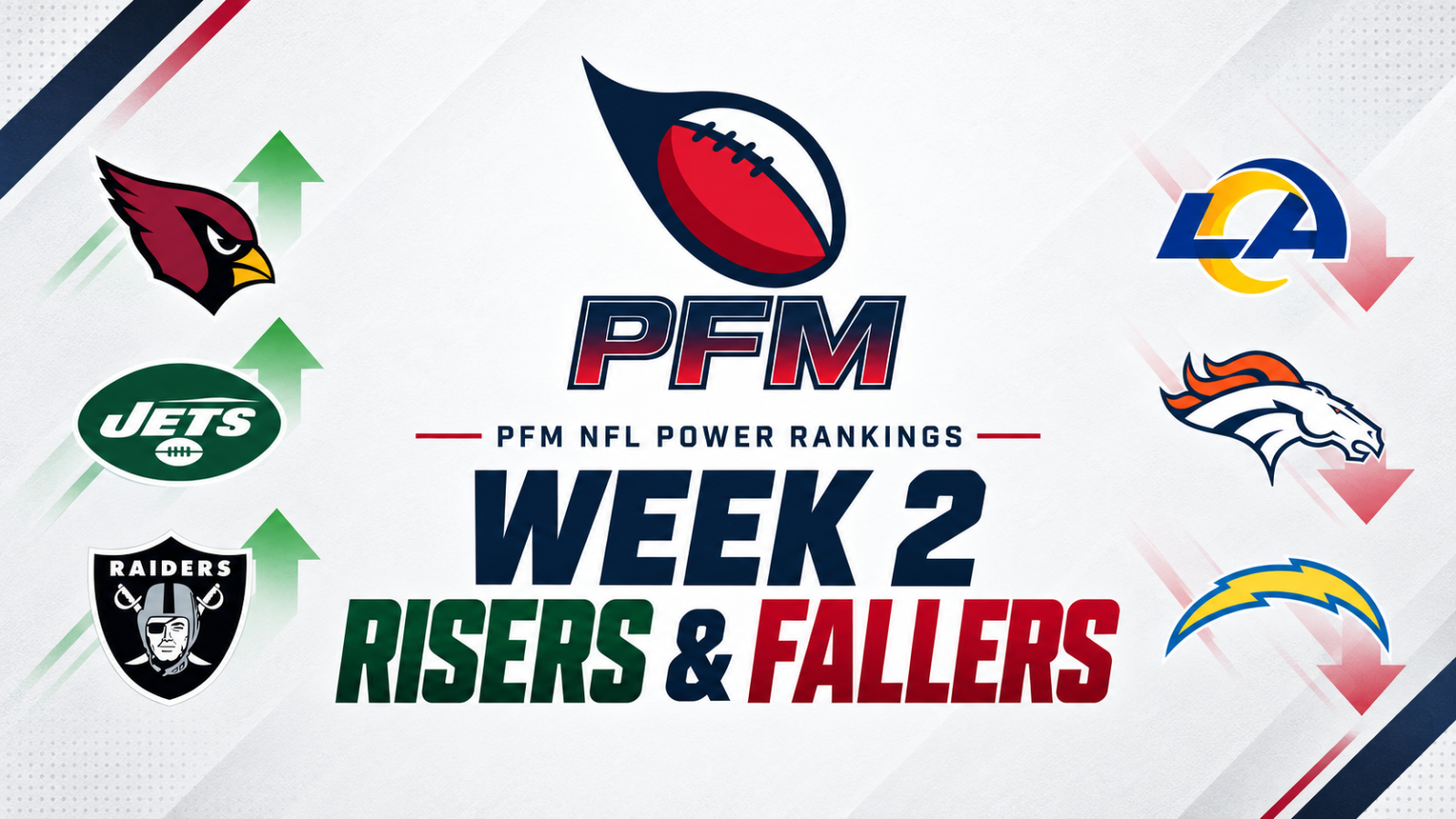
PFM’s Latest Ranking Changes page sorts risers and fallers by the change in PFM Team Score. Rank movement is shown separately. That matters this week because Arizona, the Jets and Las Vegas made the three largest score gains, even though Chicago and Jacksonville climbed farther in the 1-through-32 order.
On the other side, the Rams took the biggest hit after a rough opener in Australia, while Denver and the Chargers both fell after their offenses missed expectations.
Week 2 snapshot: These moves compare PFM’s September 8th regular-season baseline with the September 15th Week 2 update. The full board remains available in the 2026 PFM NFL Team Rankings.
| Team | Team Score | Change | PFM Rank | Rank Move |
|---|---|---|---|---|
 Arizona Cardinals Arizona Cardinals |
73.30 → 74.31 | Up 1.01 | No. 27 → No. 26 | Up 1 |
 New York Jets New York Jets |
73.40 → 74.39 | Up 0.99 | No. 25 → No. 25 | No change |
 Las Vegas Raiders Las Vegas Raiders |
72.70 → 73.62 | Up 0.92 | No. 28 → No. 28 | No change |
 Los Angeles Rams Los Angeles Rams |
90.20 → 87.87 | Down 2.33 | No. 2 → No. 3 | Down 1 |
 Denver Broncos Denver Broncos |
84.70 → 82.92 | Down 1.78 | No. 9 → No. 11 | Down 2 |
 Los Angeles Chargers Los Angeles Chargers |
83.90 → 82.72 | Down 1.18 | No. 10 → No. 12 | Down 2 |
One useful distinction: Chicago and Jacksonville each jumped four spots in the rankings, the largest rank moves of the week. Their Team Score gains were smaller at +0.58 and +0.20, so neither cracks the top three when the list is sorted by rating movement.
1. Arizona Gave PFM Its First Real Reason to Move Up
Biggest riser · +1.01 · No. 27 to No. 26
Arizona entered the opener with one of the weakest profiles on the PFM board. Then the Cardinals went on the road and beat a top-10 PFM team by 12 points.
The important part was how they did it. Jacoby Brissett threw for 277 yards, Trey McBride caught nine passes for 95 yards and the defense held Justin Herbert to 209 passing yards. Andrew Wingard’s fourth-quarter interception helped close a game Arizona controlled well enough to win without needing one fluky play to rescue it.
That does not suddenly make the Cardinals a playoff favorite. They are still No. 26, and the offensive line and long-term quarterback picture remain real concerns. Week 1 simply gave PFM stronger evidence than the preseason baseline did.
2. The Jets Finally Played the Kind of Game Their Roster Needs
Riser · +0.99 · Remains No. 25
Meanwhile the Jets did not need Geno Smith to play superhero football in Tennessee. That is exactly why the opener mattered.
Smith completed 19 of 24 passes for 215 yards, Breece Hall ran for 102 yards and New York held the ball for nearly 39 minutes. The defense added three sacks and limited Tennessee to 195 total yards. For a team PFM entered the season questioning because of offensive stability, that was a much cleaner formula than asking Smith to win a high-volume passing game every week.
The score rose almost a full point, but the Jets stayed No. 25 because the teams around them moved too. That is a good example of why PFM tracks the rating and the ranking separately. New York improved even without changing places.
3. Las Vegas Showed a Real Offensive Plan Without Brock Bowers
Riser · +0.92 · Remains No. 28
Las Vegas opened the season without Brock Bowers and still found a way to make the offense look functional. Kirk Cousins threw three touchdown passes, Ashton Jeanty ran for 102 yards and added 45 more as a receiver, and the Raiders controlled the ball for almost 35 minutes.
There were still warning signs. Cousins threw two interceptions, and this remains a young roster with limited margin in the AFC West. But Jeanty’s healthy return changed the backfield outlook, while the defense sacked Malik Willis five times and held Miami to 2-for-10 on third down.
PFM is not jumping from one win to a contender label. The Raiders remain No. 28. The move says the Week 1 version of Klint Kubiak’s team was better organized and more balanced than the baseline expected.
1. The Rams Took the Biggest Hit, but They Are Still No. 3
Biggest faller · -2.33 · No. 2 to No. 3
The Rams entered Week 1 at 90.2, which left almost no room for a performance like the one they had in Melbourne. San Francisco beat them 27-7, Matthew Stafford finished with 155 passing yards and Los Angeles converted only two of nine third downs.
For LA the defensive side created another problem. Myles Garrett did not record a tackle in his Rams debut and said afterward that his knee was not right. The concern grew when reports said Garrett would need arthroscopic knee surgery and a stint on injured reserve.
A 2.33-point drop is significant, but the context matters. Los Angeles is still No. 3 and still carries a Super Bowl-level profile around Stafford, Puka Nacua and Sean McVay. PFM moved the Rams down because the opener challenged an elite baseline, not because one loss changed the overall profile of a strong team.
2. Denver’s Offense Made the Play-Calling Change Look Bigger
Faller · -1.78 · No. 9 to No. 11
Denver came into the season close to PFM’s top tier. Its first game with Davis Webb calling plays produced 176 total yards, nine first downs and a 2-for-12 night on third down.
Bo Nix threw an interception on his first pass, lost a fumble later and finished with 131 passing yards. Kansas City deserves credit for the pressure it created, but that does not make Denver’s offensive problems less meaningful. This was the exact kind of game where the Broncos needed the offense to create easier yards and keep the defense out of bad field-position situations.
The defense is still good enough to keep Denver relevant. The Week 2 drop is about how much confidence PFM can place in the quarterback, offense and new play-calling structure after the first real test.
3. The Chargers Had the Wrong Kind of Quiet Opener
Faller · -1.18 · No. 10 to No. 12
The problem with Los Angeles scoring 14 points was not simply that it lost. PFM entered Week 1 with Arizona’s defense at the bottom of the league, while the Chargers carried a much stronger offensive and coaching baseline.
Justin Herbert finished with 209 passing yards, and the Chargers failed on fourth down on each of their final two possessions. Ladd McConkey still produced 82 receiving yards before leaving with a chest injury, but the offense never found the sustained rhythm PFM expected from Herbert and the new structure around him.
This is still a top-half team in the Week 2 rankings. It is also a team that now has to show the opener was an execution problem, not the first sign that the offense is going to struggle all year.
What Week 1 Actually Changed for PFM
The first ratings update is a good reminder that PFM is not trying to turn the standings into a power ranking. Arizona, the Jets and Las Vegas did more than win. Each showed something that directly answered a preseason concern. Arizona’s defense held up against a better-rated opponent, the Jets controlled a game without asking Geno Smith to carry it, and the Raiders found balance without Bowers.
The fallers tell the same story in reverse. The Rams looked nothing like a 90-point team for one game and immediately followed with a major Garrett health concern. Denver’s offensive transition failed its first test. The Chargers produced only 14 points against the defense PFM trusted least entering the season.
One week should not erase an offseason of evidence. That is why PFM is different than your ordinary NFL power rankings where outlets may move teams more significantly. We will continue to focus on the overall health of a franchise over the course of a season.
See every Week 2 change, not just the six biggest moves.
Sources and PFM Data
PFM Team Scores and ranks in this article were checked against the Week 2 ratings update published September 15, 2026. Week 1 game results and supporting football context were verified before publication.












Leave a comment